The two markets, and why the sticker prices look nothing alike
Virtual staging is sold two completely different ways, and comparing a price from one against a price from the other is how people end up confused.
Self-serve AI tools charge very little per image and make most of their money on the monthly plan you have to be on to get that price. Human and managed services charge per photo, with a person doing the work and a turnaround measured in hours or days.
Self-serve AI tools
Every price below was read off the company's own pricing page on September 11, 2026. Per-photo figures are the plan price divided by the photos or credits it includes.
| Service | Entry price | Per photo | How you pay |
|---|---|---|---|
| Virtual Staging AI | $16/mo, 6 photos | $2.67 | Monthly plan |
| REimagineHome | $19/mo, 30 credits | $0.63 a credit | Monthly plan |
| Collov | $19/mo, 60 photo credits | $0.32 | Monthly plan |
| AI HomeDesign | $19/mo billed yearly, 30 photos | $0.63 | Yearly plan ($228) |
| Paintit.ai | $14.99/mo, 500 credits | $0.03 a credit | Monthly plan |
| StageHQ | $19 once, 20 photos | $0.95 | One-time pack |
| PhotoUp | $1.50 a credit, 3+ credits a staged image | $4.50+ | Pay as you go |
| Apply Design | $7-$10 a coin, 1.5 coins a 2D image | $10.50-$15 | Pay as you go |
Two things stand out. First, five of the eight only reach their price on a recurring plan, and the three that sell outright are the more expensive per image. Second, the cheapest per-photo numbers depend on using the whole allowance: Collov's 32 cents a photo is 32 cents only if you stage all 60 photos every month[1].
Human and managed services
| Service | Price per photo | Notes |
|---|---|---|
| Styldod | $16-$23 | Lower price on larger orders |
| VirtualStaging.com | $24, $19.20 in bulk | $32 for a 360-degree image |
| BoxBrownie | $24 | Item removal is $4-$8 extra per image |
| Stuccco | $35 pay-as-you-go | Down to $24.50 on a $799 bundle |
Stuccco publishes its own survey of the market, putting the range at "$19-75 per photo, with a median price of $29 per photo," and reports that its average order "has 6 photos and costs $204"[7]. That is the number to hold in your head when you read a per-photo price: agents rarely buy one photo, they buy a listing's worth.
What a real listing actually costs
Per-photo prices are only useful once you know how many photos you need, and the answer is smaller than most pricing pages imply. Zillow's advice to agents is to "strive for 4-5 photos per listing," noting that while an average listing may carry 30 photos, only four or five rooms need staging[6]. Stuccco says most staging companies recommend four to six[7]. So, for four to six photos:
- Through an AI subscription: the photos themselves are pennies to a few dollars each, but the entry plans cost $16 to $19 a month and keep charging until you cancel[2, 1].
- Through a human service: roughly $64 to $210 for the listing, paid once[4, 5].
- At $5 a photo with no plan: $20 to $30, paid once.
- Physical staging, for comparison: NAR's 2025 staging report puts the median cost of using a staging service at $1,500[15].
The reason that last line matters is what a typical agent's year looks like. NAR's 2026 Member Profile found the typical Realtor closed nine transaction sides in 2025[16]. Only some of those are listings, and only some listings are empty. That is a handful of staged photos a year. A monthly plan sized for dozens of images a month is not built for that person; they would pay for most of the year without using it.
The costs that are not on the headline price
- Add-ons. BoxBrownie charges $4 to remove one or two small items and $8 for a standard item removal, on top of its $24 staging price[14]. A room with furniture already in it costs more than an empty one almost everywhere.
- Plan minimums. AI HomeDesign's $19 a month is the yearly rate, billed as $228 up front[9]. A low monthly figure on a yearly plan is still a yearly commitment.
- Unused allowance. A monthly photo allowance you do not use is money spent on nothing, and listings arrive unevenly: several in spring, then none for weeks.
How to work out which side you belong on
The choice is not really "cheap or expensive." It is a question about your own volume, and it has a clean answer.
A monthly plan makes sense when you stage most weeks. A photographer serving several agents, a brokerage with a steady flow of vacant listings, a property manager turning units over — those people fill an allowance and get genuinely low per-image costs. If you would use twenty or more images a month, every month, the subscription math works and the AI tools are very cheap indeed.
Pay-per-photo makes sense when listings arrive unevenly, which describes most individual agents. A few listings a year, only some of them vacant, clustered in the spring — that is a pattern where a monthly plan spends most of the year doing nothing.
A human service makes sense when the room is difficult or the stakes are high. An awkward layout, a historic property, a luxury listing where a slightly wrong sofa reads as cheap — a person looking at the photo is worth the $24 to $35[14, 5]. It is also the right answer when you want a specific look you can describe but not generate.
The quality question, honestly
Price differences this large usually mean some quality difference, and here they partly do. The complaints agents make about AI staging cluster in three places, and they are worth knowing before you buy on price alone.
- Furniture that does not fit the room. A sofa that would not physically go where it has been placed. A buyer standing in the room notices immediately.
- Consistency across angles. Stage three photos of the same living room and a human service will put the same sofa in the same place in all three. Most AI tools will not, because each photo is generated separately.
- The "clip art" look. Cheaper output can read as obviously fake at full size, which does the opposite of what staging is for.
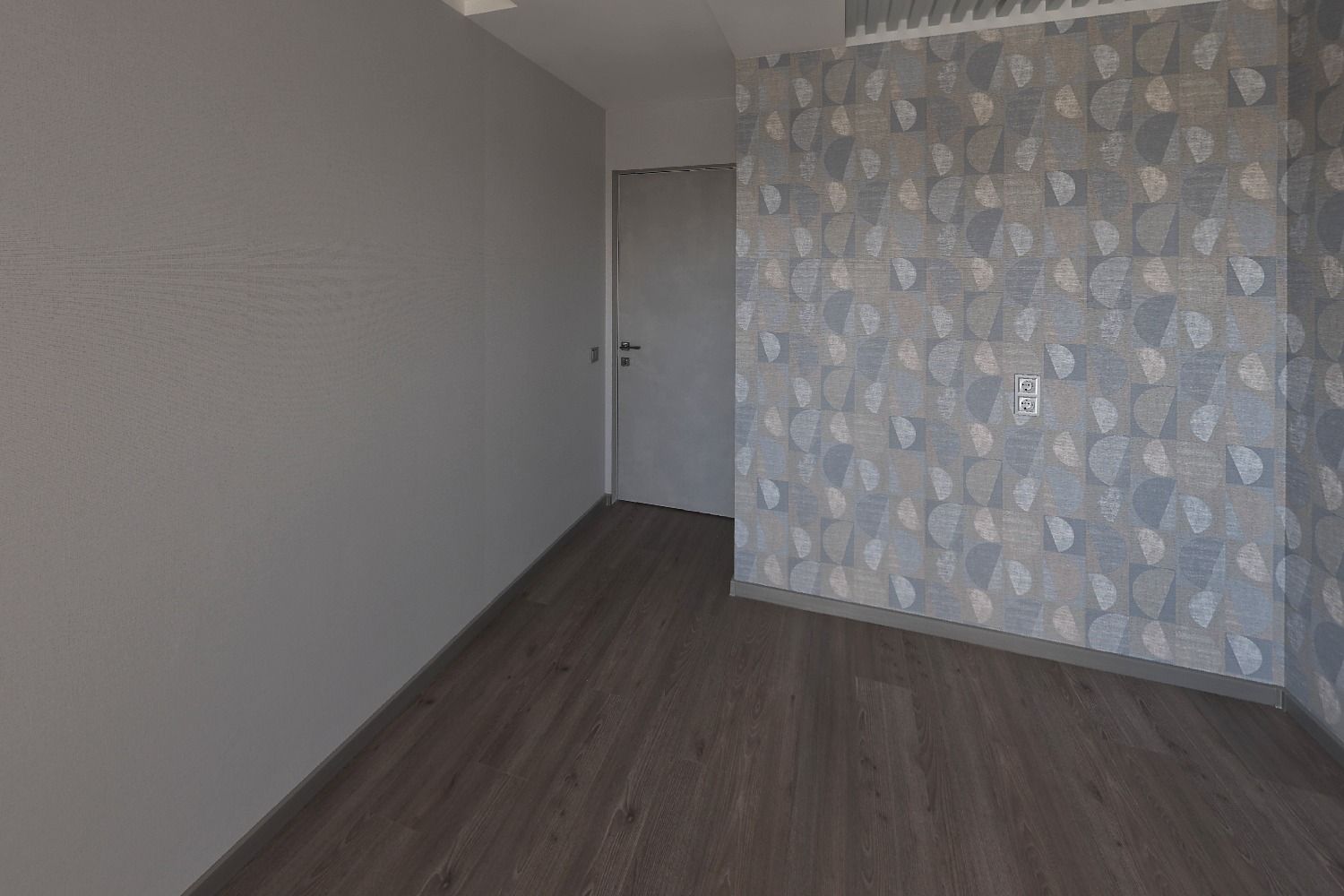
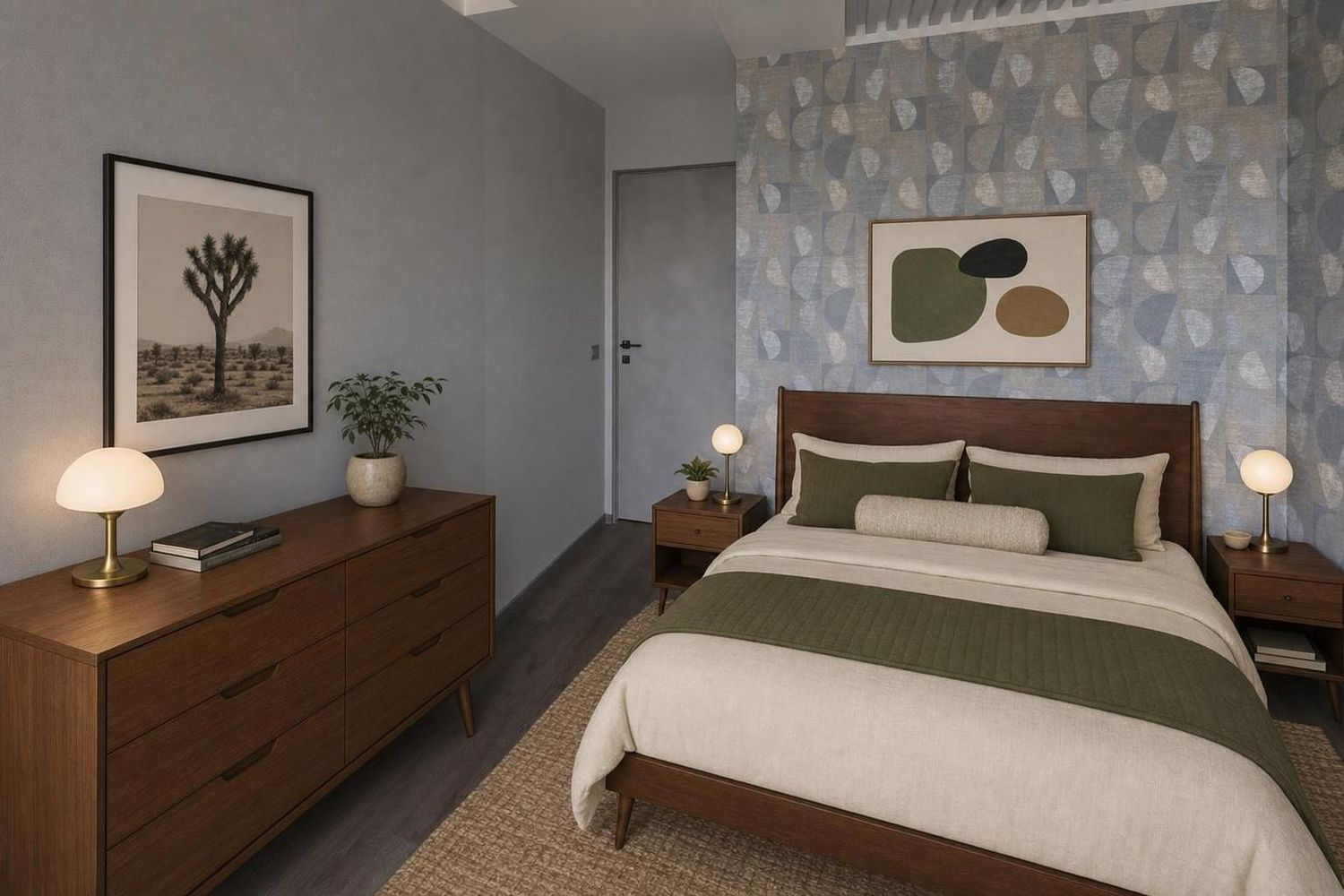
None of this is a reason to avoid AI staging — it is a reason to look at the output on your own room before committing, which is why a free trial that produces a usable, unwatermarked image matters more than the headline price. The bedroom at the top of this page is a real example: an empty room, staged by our own engine in the mid-century style, unedited.
Where SoldStaged sits, plainly
We charge $5 a photo, with no subscription, and photos never expire. Against the AI tools that is more per image, and we are not going to pretend otherwise — what you are not doing is paying monthly to hold the price. Against the human services agents usually compare us to, it is three to seven times cheaper. Your first photo is free with no account and no credit card, and unused photos are refunded for 30 days, which means buying for a listing you end up not needing costs nothing.
Buying five or more adds free photos on top. The price of a photo never moves; you just get extra ones.